Homemade English Muffins Recipe
Introduction
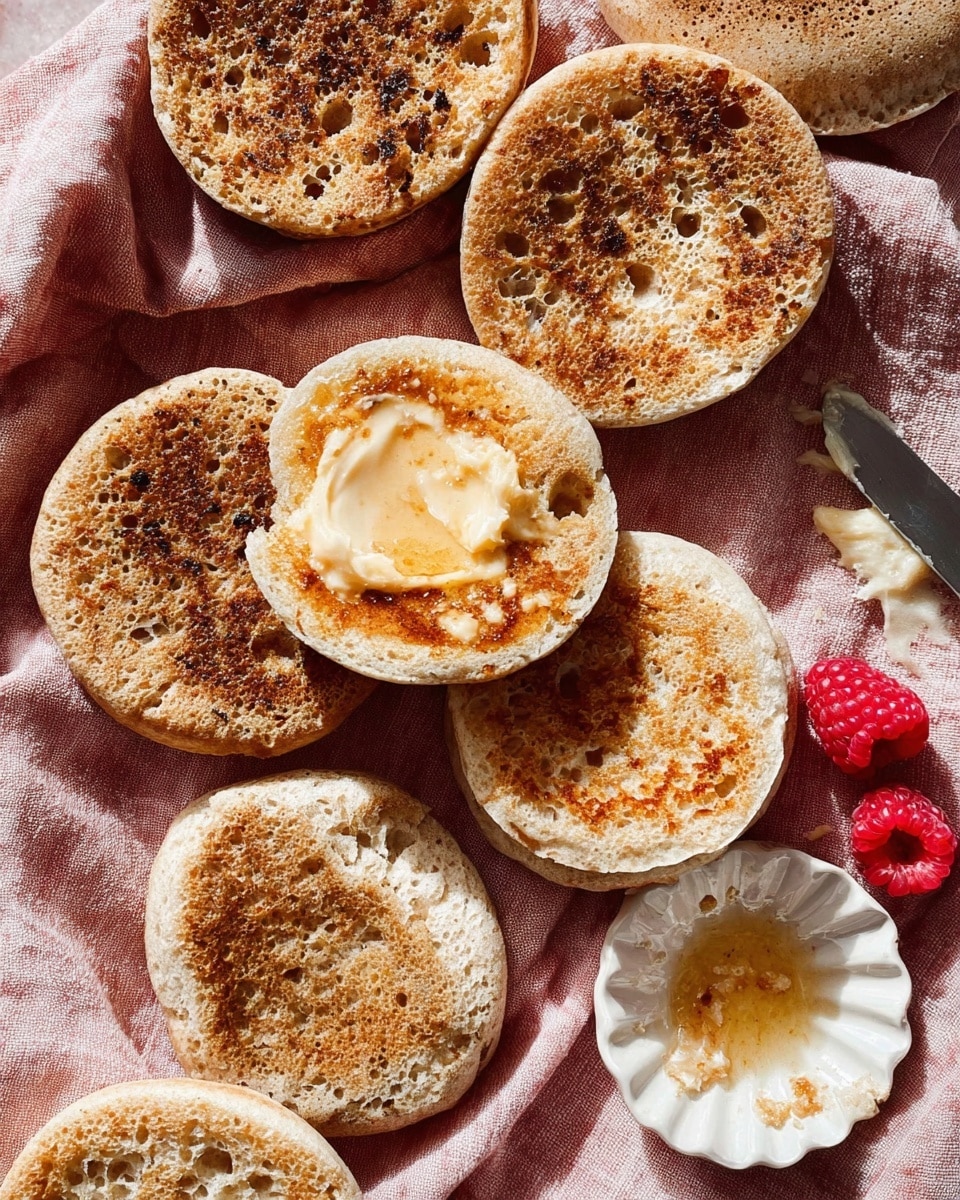
Homemade English muffins are delightfully soft with a slightly crisp exterior and a signature nooks-and-crannies texture perfect for trapping butter and jam. This recipe makes fluffy, flavorful muffins that you can toast fresh or use for breakfast sandwiches. Enjoy the warm, comforting taste of bakery-quality muffins right from your kitchen.
Ingredients
- 1 and 1/4 cups (300ml) milk, warmed to about 100°F (38°C)
- 2 teaspoons (6g) instant or active dry yeast
- 3 Tablespoons (64g) honey
- 2 Tablespoons (28g) unsalted butter, melted & slightly cooled
- 1 large egg, at room temperature
- 1 and 1/2 teaspoons salt
- 1 cup (130g) whole wheat flour (spooned & leveled)
- 2 cups + 3 Tablespoons (280g) bread flour or all-purpose flour (spooned & leveled)
- Cornmeal or semolina flour for handling dough (at least 1/2 cup (60g))
Instructions
- Step 1: In a large un-greased mixing bowl, whisk together the warm milk, yeast, and honey. Cover and let sit for about 5 minutes until the mixture is foamy on top. If you don’t have a stand mixer, this can be mixed by hand with a wooden spoon or silicone spatula.
- Step 2: Add the melted butter, egg, salt, whole wheat flour, and 1 cup of the bread flour to the yeast mixture. Whisk to combine.
- Step 3: Add 1 more cup of bread flour and beat on low speed for 2 minutes; the dough will be very sticky like a loose batter. Then add the remaining flour, scrape down the bowl sides, and beat on low for 1 more minute. Scrape down again and fold the dough a few times with a spatula. Do not add extra flour—the dough should remain sticky.
- Step 4: Cover the dough tightly with plastic wrap or foil and let rise at room temperature until doubled in size, about 2 hours. For best flavor and texture, refrigerate the dough for 6 to 24 hours after the initial rise. The dough may puff slightly or deflate slightly after 24 hours in the fridge.
- Step 5: Line two large baking sheets with parchment paper or silicone mats—one for shaping the muffins and one for baking.
- Step 6: Remove the cold dough from the refrigerator (no need to warm). Sprinkle cornmeal or semolina on the dough surface and your hands. Pinch off about 1/3 cup of dough, shape gently into a 1-inch thick disc about 3.5 inches in diameter, and place on the lined baking sheet. Repeat to make about 12 muffins. Sprinkle tops lightly with cornmeal and cover. Let rest for 20 minutes; do not let rest longer to avoid over-puffing.
- Step 7: Meanwhile, heat a griddle or large skillet over medium heat (about 325°F/163°C). Grease lightly with butter if not nonstick. Sprinkle lightly with cornmeal before cooking.
- Step 8: Carefully transfer as many muffins as fit comfortably on the griddle with 2 inches spacing. Flatten edges gently with a spatula without deflating. Cook for 7-8 minutes until golden, then flip and cook another 7-8 minutes. Adjust heat if they brown too quickly. Transfer cooked muffins to the second baking sheet.
- Step 9: Preheat the oven to 350°F (177°C).
- Step 10: Bake the cooked muffins for 8–11 minutes or until the internal temperature reaches 200°F (93°C). If you don’t have a thermometer, cut one open after 8 minutes to check for doneness; return to oven if still doughy inside.
- Step 11: Remove from oven and cool muffins on the baking sheet for 10 minutes. Slice with a serrated knife and toast before serving for the best texture and flavor. They’re delicious with butter, honey butter, jam, or as sandwich bases.
Tips & Variations
- For best results, refrigerate the dough overnight to develop flavor and texture.
- Use cornmeal or semolina liberally on your hands and work surface to prevent sticking when shaping.
- Try swapping whole wheat flour for white whole wheat flour for a milder taste.
- Experiment with toppings such as cinnamon sugar on top before cooking for a sweet twist.
- If you don’t have a griddle, a well-seasoned cast iron skillet works great.
Storage
Store leftover muffins covered at room temperature for up to 2 days. After that, keep them refrigerated for up to 3 days. For longer storage, freeze the cooled muffins in airtight bags. To reheat, toast directly from frozen or warm in the oven until heated through.
How to Serve
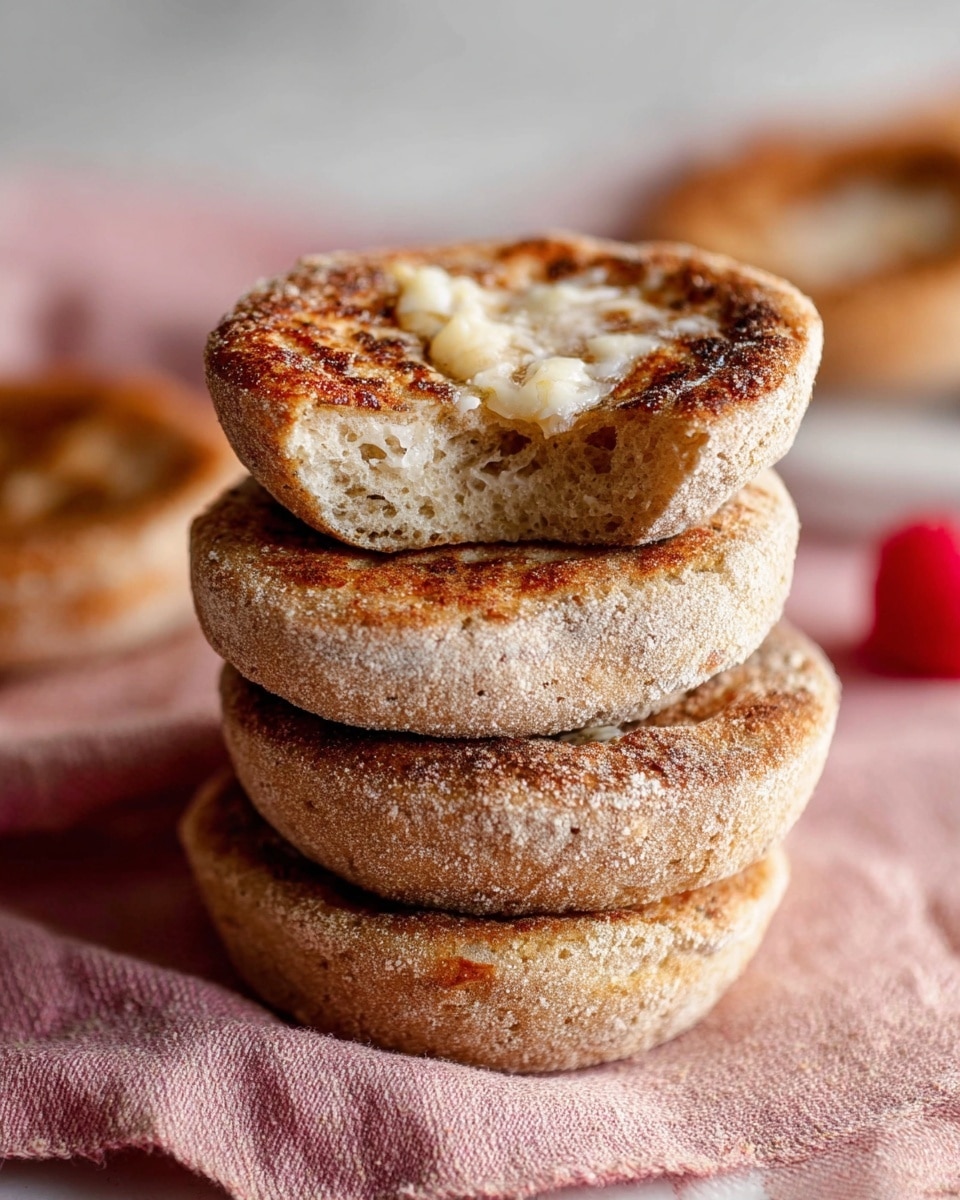
Serve this delicious recipe with your favorite sides.
FAQs
Can I use all-purpose flour instead of bread flour?
Yes, all-purpose flour works fine though bread flour will give a slightly chewier texture. Either flour should be spooned and leveled for accurate measurement.
Do I have to refrigerate the dough overnight?
No, you can proceed to cook after the initial 2-hour rise, but refrigerating for 6–24 hours enhances flavor and texture significantly.
PrintHomemade English Muffins Recipe

This homemade English muffins recipe yields soft, airy, and flavorful muffins with a perfect golden crust. Made from a sticky, well-risen dough enriched with honey, butter, and egg, these muffins are cooked low and slow on a griddle before finishing in the oven for a tender, perfectly cooked interior. Ideal for slicing and toasting, they make a delicious base for breakfast spreads and sandwiches.
- Prep Time: 15 minutes
- Cook Time: 45 minutes
- Total Time: 3 hours 15 minutes (including rise time, excluding optional refrigeration time)
- Yield: 12 English muffins 1x
- Category: Bread
- Method: Stovetop
- Cuisine: American
Ingredients
Wet Ingredients
- 1 and 1/4 cups (300ml) milk, warmed to about 100°F (38°C)
- 3 Tablespoons (64g) honey
- 2 Tablespoons (28g) unsalted butter, melted & slightly cooled
- 1 large egg, at room temperature
Dry Ingredients
- 2 teaspoons (6g) instant or active dry yeast
- 1 and 1/2 teaspoons salt
- 1 cup (130g) whole wheat flour (spooned & leveled)
- 2 cups + 3 Tablespoons (280g) bread flour or all-purpose flour (spooned & leveled)
For Handling
- Cornmeal or semolina flour, at least 1/2 cup (60g)
Instructions
- Prepare the yeast mixture: In a large un-greased mixing bowl or stand mixer bowl with dough hook, whisk together the warm milk, yeast, and honey. Cover and let sit about 5 minutes until foamy, indicating yeast is activated.
- Mix dough ingredients: Add melted butter, egg, salt, whole wheat flour, and 1 cup of bread flour to the yeast mixture and whisk together. Then add 1 more cup bread flour and beat on low speed for 2 minutes. The dough will be very sticky and loose. Add remaining flour, scrape the bowl sides with a silicone spatula, and beat 1 more minute on low speed. Fold dough a few times with spatula; do not add more flour.
- First rise: Cover dough tightly with plastic wrap or foil and set at room temperature for about 2 hours until doubled in size with visible air bubbles. For best flavor and texture, refrigerate dough for 6 to 24 hours after initial rise to develop more flavor and improve texture.
- Prepare for shaping: Line two large baking sheets with parchment paper or silicone mats. One sheet will hold shaped uncooked muffins, the other will hold the cooked muffins before baking.
- Shape muffins: Remove cold dough from refrigerator; do not bring to room temperature. Sprinkle cornmeal or semolina on dough surface and hands. Pinch off about 1/3 cup (2.5–3 oz) dough, gently shape into 1-inch thick discs approximately 3.5 inches in diameter. Place on lined baking sheet spaced apart. Lightly sprinkle tops with cornmeal and cover to rest 20 minutes—not longer to avoid over-puffing.
- Heat griddle/pan: Preheat a griddle, large skillet, or cast iron skillet on medium (~325°F/163°C). If pan is nonstick/seasoned no need to grease; otherwise, lightly grease with butter. Sprinkle lightly with cornmeal before cooking.
- Cook muffins on stovetop: Using a flat spatula, transfer as many muffins as fit with 2-inch gaps onto griddle. Gently flatten edges with spatula without deflating. Cook 7-8 minutes until golden brown, flip, gently flatten edges again, and cook another 7-8 minutes. Adjust heat if browning too fast.
- Preheat oven: While cooking muffins on stovetop, preheat oven to 350°F (177°C).
- Bake muffins: Transfer cooked muffins to second baking sheet. Bake for 8-11 minutes or until internal temperature reaches 200°F (93°C). If no thermometer, test by slicing open; bake longer if doughy.
- Cool and serve: Remove muffins from oven and cool 10 minutes on baking sheet. Slice in half with serrated knife or pry halves apart with fork to preserve craggy texture. Toast before serving with butter, honey, jam, or use for sandwiches.
- Storage: Store leftovers covered at room temperature up to 2 days, then refrigerate up to 3 days. Freeze for longer storage.
Notes
- Warming milk to 100°F is enough to activate yeast without killing it.
- Dough is intentionally very sticky; avoid adding extra flour to maintain light texture.
- Resting dough in the refrigerator for 6-24 hours enhances flavor and structure but is optional.
- If no stand mixer, mix dough by hand using a wooden spoon or silicone spatula.
- Cook muffins on a griddle or cast iron for best results.
- Use cornmeal or semolina liberally to prevent sticking during shaping and cooking.
- Freeze leftover muffins wrapped tightly in plastic and then foil; thaw before toasting.
Keywords: English muffins, homemade bread, breakfast bread, easy bread recipe, stovetop bread, honey wheat muffins