Spicy Korean Noodle Soup (Quick & Healthy) Recipe
Introduction
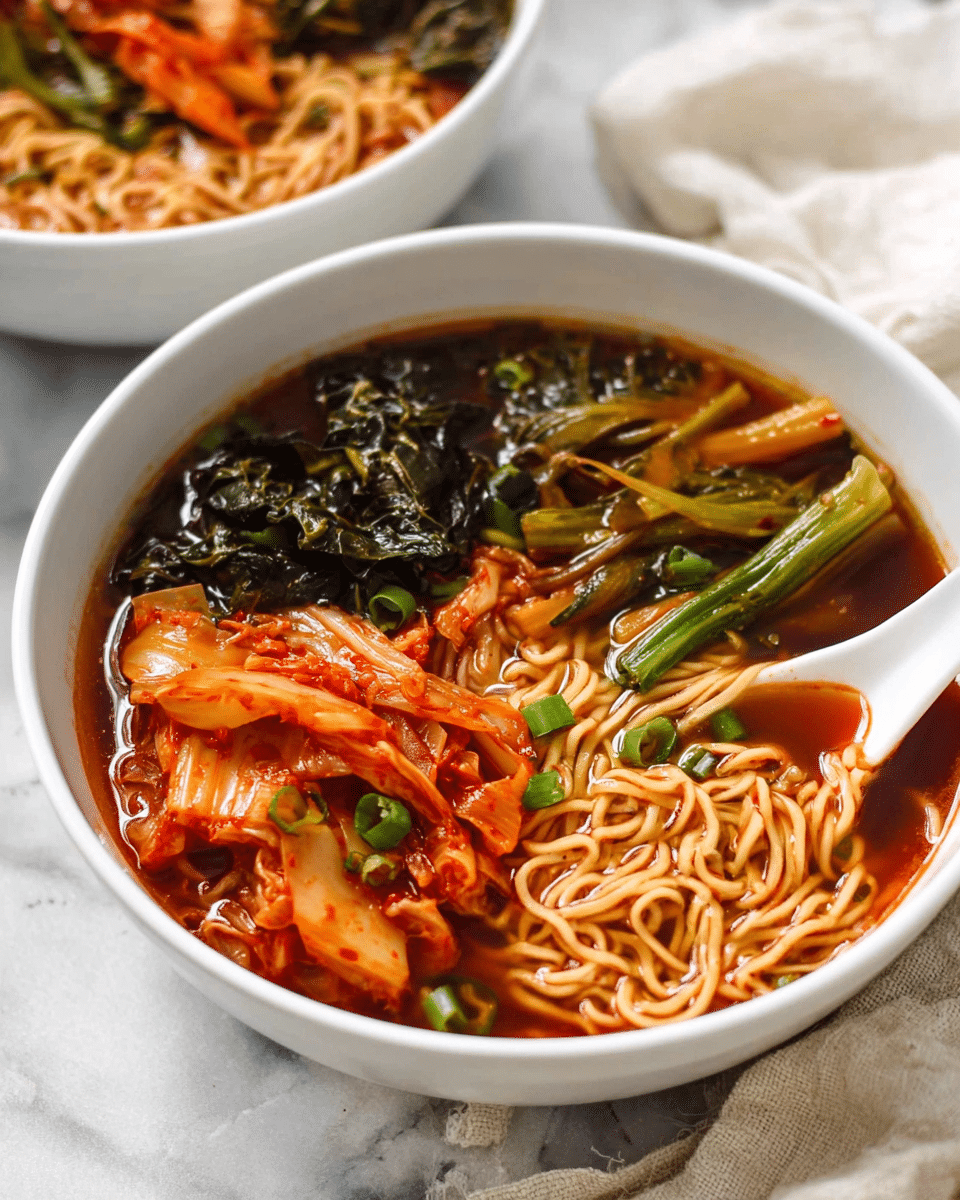
Spicy Korean Noodle Soup is a quick and healthy meal bursting with vibrant flavors from kimchi and gochujang. This comforting soup is perfect for any day you crave something warming and satisfying with a spicy kick.
Ingredients
- 4 cups / 1 litre chicken stock or broth (low-sodium)
- 2/3 cup cabbage kimchi
- 2 tbsp kimchi juice (from kimchi tub)
- 3 tbsp gochujang
- 2 tbsp light soy sauce
- 2 tsp fish sauce (or substitute with more soy sauce)
- 1 tbsp Chinese cooking wine (Shaoxing wine)
- 2 slices ginger (about 0.7cm / 1/3″ thick, skin on)
- 1 large garlic clove (smashed)
- 200g / 7oz thin fresh egg noodles (or 100g / 3.5oz dried)
- 4 stems choi sum (or other Asian greens, cut into 7cm / 2.5″ lengths, stems separated from leaves)
- 1 small carrot (peeled, cut into thin matchsticks)
- 2 1/2 tsp toasted sesame oil
- 1/4 cup finely sliced green onions (about 1 stem)
Instructions
- Step 1: Place chicken stock, kimchi, kimchi juice, gochujang, soy sauce, fish sauce, Chinese cooking wine, ginger, and garlic in a saucepan. Bring to a simmer over medium-high heat, then reduce heat to maintain a gentle simmer. Let it simmer uncovered for 10 minutes.
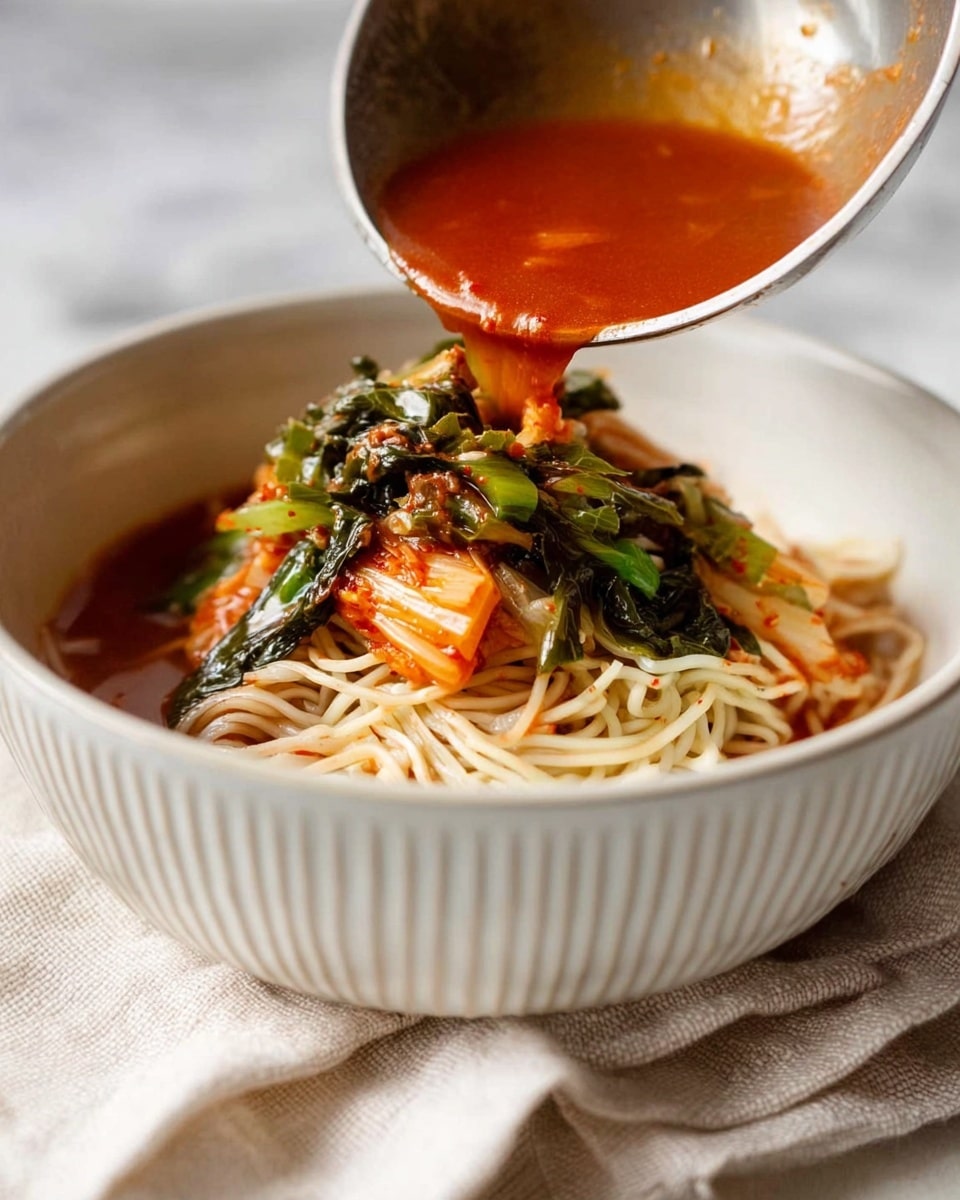
- Step 2: Add choi sum stems and carrot to the broth, simmer for 2 minutes. Then add choi sum leaves and simmer for an additional minute. Stir in toasted sesame oil just before serving.
- Step 3: While the broth simmers, cook the egg noodles according to package instructions. Drain and rinse quickly under cold water, shaking off excess water.
- Step 4: Divide noodles into serving bowls. Remove the garlic and ginger slices from the broth, then ladle the hot broth and vegetables over the noodles. Garnish with finely sliced green onions and serve immediately.
Tips & Variations
- For a vegetarian version, use vegetable broth and substitute fish sauce with additional soy sauce or a splash of mushroom soy sauce.
- Add a boiled egg or tofu cubes for extra protein.
- If you like more heat, drizzle extra gochujang or sprinkle chili flakes when serving.
- Fresh egg noodles give the best texture, but dried noodles work well if fresh are not available.
Storage
Store leftover soup in an airtight container in the refrigerator for up to 3 days. Keep noodles separate if possible to avoid sogginess. Reheat gently on the stovetop until hot, adding a splash of water or broth if needed to loosen the soup.
How to Serve
Serve this delicious recipe with your favorite sides.
FAQs
Can I make this soup vegan?
Yes, use vegetable broth instead of chicken broth and replace fish sauce with soy sauce or a vegan alternative.
What can I substitute for gochujang?
If you don’t have gochujang, try mixing a bit of miso paste with chili paste or tomato paste and a pinch of sugar to mimic its sweet-spicy flavor.
PrintSpicy Korean Noodle Soup (Quick & Healthy) Recipe
This Spicy Korean Noodle Soup is a quick, healthy, and flavorful dish featuring a savory chicken broth enriched with kimchi, gochujang, and fresh vegetables. Perfect for a comforting meal, it combines tender egg noodles with vibrant Asian greens and a subtly spicy, tangy broth that you can prepare in under 30 minutes.
- Prep Time: 10 minutes
- Cook Time: 15 minutes
- Total Time: 25 minutes
- Yield: 4 servings 1x
- Category: Soup
- Method: Stovetop
- Cuisine: Korean
Ingredients
Broth Ingredients
- 4 cups / 1 litre chicken stock/broth (low-sodium)
- 2/3 cup cabbage kimchi
- 2 tbsp kimchi juice (from kimchi tub)
- 3 tbsp gochujang (Korean chili paste)
- 2 tbsp light soy sauce
- 2 tsp fish sauce (or substitute with more soy sauce)
- 1 tbsp Chinese cooking wine (Shaoxing wine)
- 2 slices ginger (0.7cm / 1/3″ thick, skin on)
- 1 large garlic clove (smashed)
Noodles and Vegetables
- 200g / 7oz thin fresh egg noodles (or 100g / 3.5oz dried noodles)
- 4 stems choi sum (or other Asian greens, cut into 7cm / 2.5″ lengths, stems separated from leaves)
- 1 small carrot (peeled, cut into thin matchsticks)
Finishing
- 2 1/2 tsp toasted sesame oil
- 1/4 cup finely sliced green onions (1 stem)
Instructions
- Prepare the Broth: Place all broth ingredients — chicken stock, cabbage kimchi, kimchi juice, gochujang, light soy sauce, fish sauce, Chinese cooking wine, ginger slices, and smashed garlic — into a saucepan. Bring it to a simmer over medium-high heat, then reduce the heat to maintain a gentle simmer. Let it simmer uncovered for 10 minutes to develop flavor.
- Cook the Vegetables: Add the choi sum stems and the thinly sliced carrot to the simmering broth. Let it cook for 2 minutes, then add the choi sum leaves and simmer for an additional 1 minute. Just before serving, stir in the toasted sesame oil to enhance the aroma and flavor.
- Cook the Noodles: While the broth simmers, cook the egg noodles in boiling water according to the packet instructions. Drain the noodles, rinse them quickly under cold tap water to stop cooking and remove excess starch, then shake off the water thoroughly.
- Assemble and Serve: Divide the noodles evenly between serving bowls. Using a slotted spoon, pick out the ginger slices and garlic from the broth, then ladle the hot broth along with the cooked vegetables over the noodles. Garnish with the finely sliced green onions and serve immediately for a warm, spicy, and comforting Korean noodle soup experience.
Notes
- Note 1: Using cabbage kimchi and its juice adds authentic fermented flavors. You can find these in most Asian grocery stores.
- Note 2: Gochujang is a Korean fermented chili paste that balances heat with sweetness and umami.
- Note 3: Light soy sauce provides saltiness without overpowering; adjust according to taste.
- Note 4: Shaoxing wine adds depth; if unavailable, you may omit or substitute with dry sherry.
- Note 5: Smashed garlic releases more aroma and flavor during simmering.
- Note 6: Fresh egg noodles cook faster and have a tender texture; dried noodles work well if fresh are not available.
- Note 8: Toasting sesame oil enhances its nutty flavor; use a good quality toasted oil for best results.
Keywords: spicy Korean noodle soup, kimchi noodle soup, gochujang soup, quick Korean soup, healthy noodle soup, Asian noodle soup