Miso Soup Recipe
Introduction
Miso soup is a comforting and traditional Japanese broth that balances savory umami flavors with delicate ingredients like tofu and seaweed. This simple recipe guides you through making a classic miso soup from scratch, perfect for any meal.
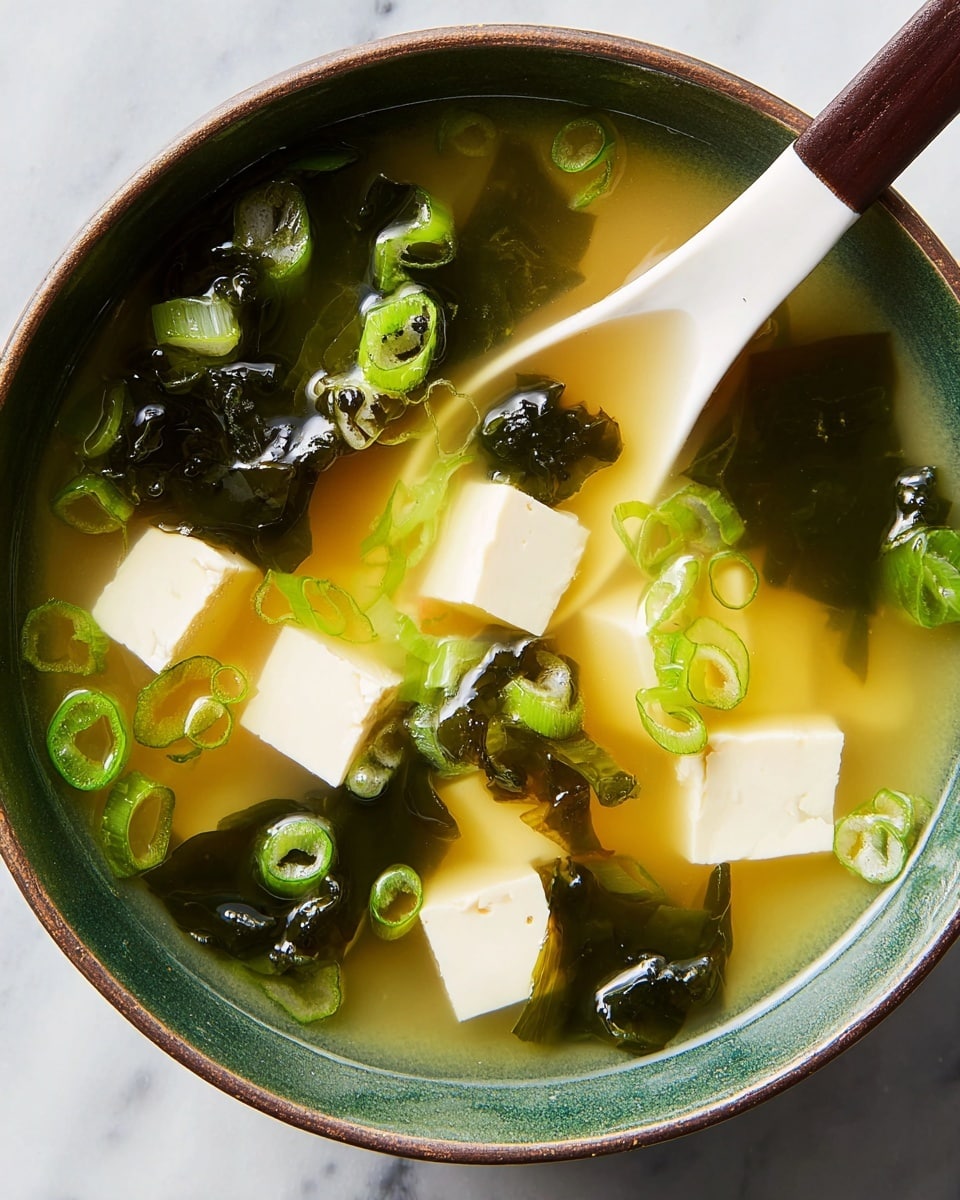
Ingredients
- 1 large piece kombu (about 4″)
- 1 1/2 cups bonito flakes
- 1/3 cup white miso
- 3 tablespoons sliced scallions
- 2 tablespoons dried wakame
- 4 ounces silken tofu, cut into 1/2″ cubes
- 6 cups water
Instructions
- Step 1: In a large pot over medium heat, combine the kombu and 6 cups of water. Heat until the water just starts to simmer or reaches 150ºF, then remove the kombu immediately.
- Step 2: Bring the pot to a boil and add the bonito flakes. Reduce heat to medium-low and simmer for 10 to 15 minutes, allowing the stock to infuse.
- Step 3: Strain the stock through a fine-mesh sieve into a medium bowl, pressing on the solids to extract extra flavor.
- Step 4: Return the strained dashi to the pot and bring it to a simmer over medium heat.
- Step 5: Whisk in the white miso paste until fully dissolved, then stir in sliced scallions and dried wakame.
- Step 6: Divide the cubed silken tofu evenly among bowls and pour the hot soup over the tofu before serving.
Tips & Variations
- For a richer flavor, substitute white miso with red or mixed miso paste.
- Add mushrooms like shiitake or enoki for extra texture and umami.
- Use fresh wakame soaked briefly in water if dried is unavailable.
- Be careful not to boil the soup after adding miso to preserve its delicate flavors and nutrients.
Storage
Store leftover soup without tofu in an airtight container in the refrigerator for up to 2 days. Reheat gently on the stove without boiling. Add tofu cubes fresh to maintain their texture and flavor.
How to Serve
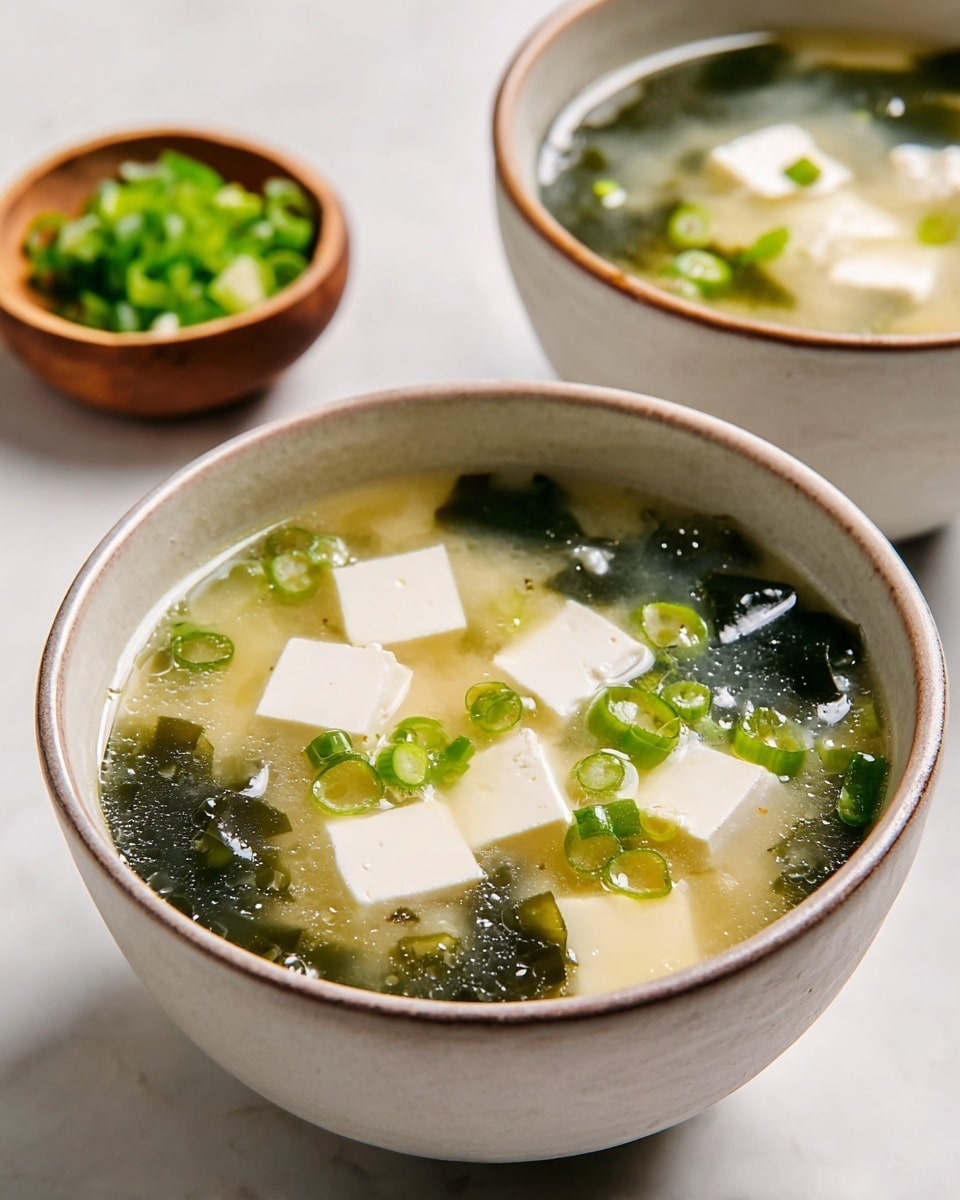
Serve this delicious recipe with your favorite sides.
FAQs
Can I make miso soup without kombu and bonito flakes?
Yes, you can use store-bought dashi powder or vegetable broth as a base, but traditional kombu and bonito flakes provide the best authentic umami flavor.
Why shouldn’t I boil miso soup after adding miso paste?
Boiling miso can degrade its delicate flavors and reduce the beneficial probiotics, so it’s best to dissolve miso in warm broth just before serving.
PrintMiso Soup Recipe

A traditional Japanese miso soup featuring homemade dashi broth with kombu and bonito flakes, enriched with white miso paste, wakame seaweed, scallions, and soft silken tofu for a comforting and savory starter or light meal.
- Prep Time: 10 minutes
- Cook Time: 20 minutes
- Total Time: 30 minutes
- Yield: 4 servings 1x
- Category: Soup
- Method: Stovetop
- Cuisine: Japanese
- Diet: Gluten Free
Ingredients
Dashi Broth
- 1 large piece kombu (about 4 inches)
- 6 cups water
- 1 1/2 cups bonito flakes
Soup Ingredients
- 1/3 cup white miso paste
- 3 tablespoons sliced scallions
- 2 tablespoons dried wakame seaweed
- 4 oz silken tofu, cut into 1/2 inch cubes
Instructions
- Prepare Dashi Stock: In a large pot over medium heat, combine the kombu and 6 cups of water. Heat until the water is just about to simmer or reaches 150ºF on an instant-read thermometer, then promptly remove the kombu to avoid bitterness. Bring the water to a boil, add the bonito flakes, reduce the heat to medium-low, and simmer for 10 to 15 minutes to infuse the stock with flavor. Strain through a fine-mesh sieve into a medium bowl, pressing to extract all the flavorful stock.
- Make Miso Soup Base: Pour the strained dashi back into the pot and bring it to a gentle simmer over medium heat. Whisk in the white miso paste until fully dissolved to ensure a smooth broth. Stir in the sliced scallions and dried wakame seaweed to hydrate and flavor the soup.
- Serve: Place the cubed silken tofu evenly into serving bowls. Pour the hot miso soup over the tofu and serve immediately, enjoying the delicate balance of umami flavors.
Notes
- Be careful not to boil kombu to maintain a clear broth and avoid bitterness.
- Use a fine-mesh sieve to ensure the broth is smooth and free of particulates.
- Adjust miso paste quantity to taste, as some brands vary in saltiness.
- Silken tofu is preferred for its soft texture but can be substituted with firm tofu if desired.
Keywords: miso soup, dashi, Japanese soup, tofu soup, kombu, bonito flakes, wakame, miso paste