Kung Pao Beef Lo Mein Recipe
Introduction
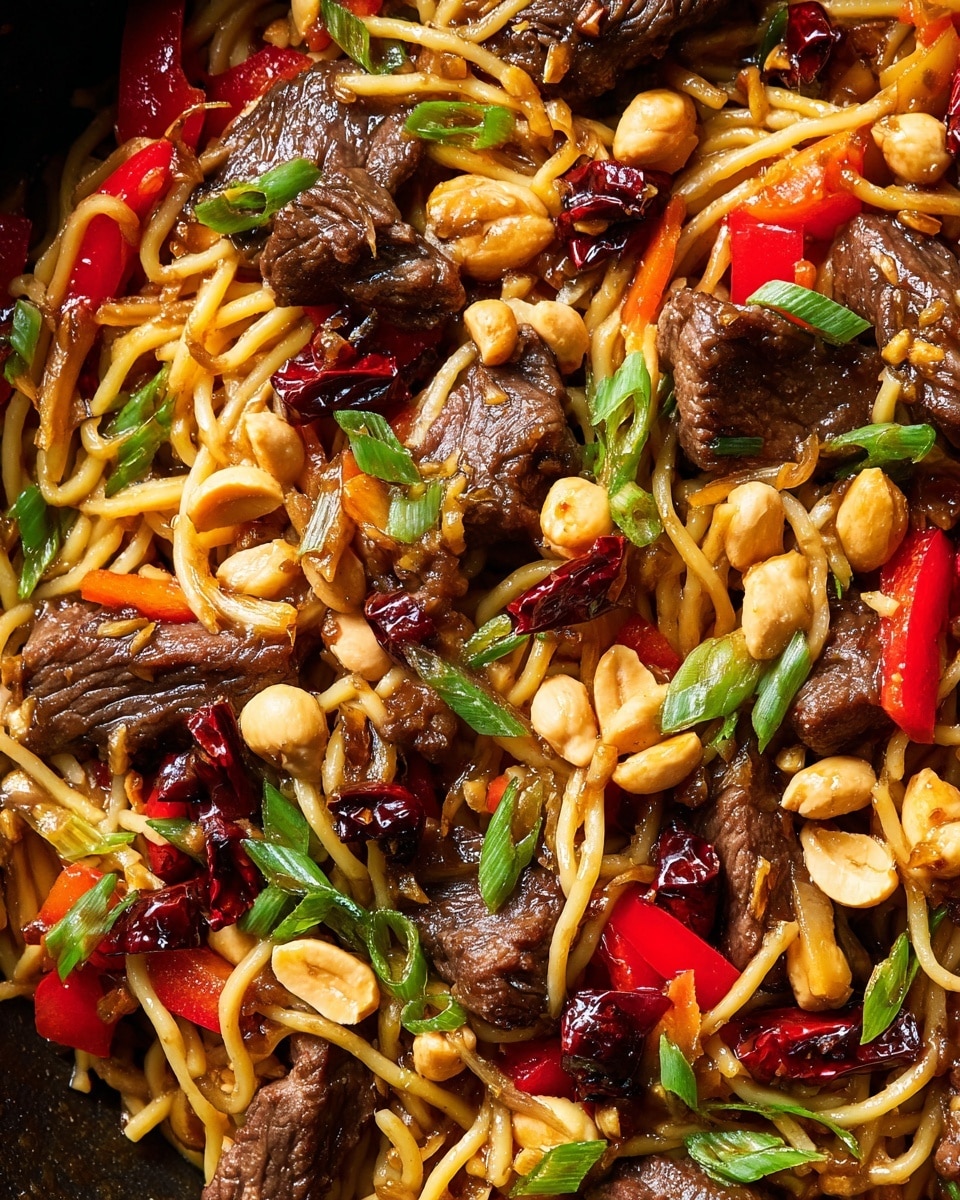
Kung Pao Beef Lo Mein is a flavorful twist on a classic Chinese favorite, combining tender marinated beef with spicy chiles, crunchy peanuts, and savory noodles. This dish balances heat, sweetness, and umami for a satisfying meal that’s perfect for weeknights or entertaining.
Ingredients
- 1 large egg white
- 1 lb. flank steak, thinly sliced against the grain
- 4 tbsp. reduced-sodium soy sauce, divided
- 4 tsp. cornstarch, divided
- 4 tsp. Shaoxing wine, dry sherry, or mirin, divided
- 1 (10-oz.) pkg. lo mein noodles
- 3 tbsp. plus 1 1/2 tsp. Chinese black vinegar or rice wine vinegar
- 3 tbsp. granulated sugar
- 1 tsp. kosher salt
- 1/2 tsp. MSG (optional)
- 4 tbsp. vegetable oil, divided
- 6 dried chiles (such as Sichuan er jing tiao or chiles de árbol), seeds removed, cut into 1/4″ pieces
- 1 cup roasted, unsalted peanuts
- 1/2 tsp. Sichuan peppercorns or freshly ground black pepper
- 1 red bell pepper, seeds and ribs removed, finely chopped
- 1 (1″) piece fresh ginger, peeled, grated (about 1 Tbsp.)
- 5 garlic cloves, grated
- 4 scallions, white and pale green parts cut into 1″ pieces, dark green parts thinly sliced
Instructions
- Step 1: In a medium bowl, mix egg white, steak, 1 tablespoon soy sauce, 2 teaspoons cornstarch, and 1 teaspoon wine. Cover and let sit at room temperature for at least 20 minutes and up to 1 hour.
- Step 2: Meanwhile, cook lo mein noodles according to package directions. Drain and set aside.
- Step 3: In a small bowl, whisk together vinegar, sugar, salt, MSG (if using), remaining 3 tablespoons soy sauce, 3 teaspoons wine, and 2 teaspoons cornstarch.
- Step 4: In a large wok or cast-iron skillet over medium-high heat, heat 3 tablespoons oil. Arrange half of the beef in a single layer and cook, stirring occasionally, until browned and just cooked through, about 2 to 3 minutes. Transfer to a plate. Repeat with the remaining beef. Pour any juices over the cooked beef.
- Step 5: Reduce heat to medium-low and heat remaining 1 tablespoon oil in the wok. Add chiles, peanuts, and peppercorns. Cook, stirring often, until chiles darken slightly and peanuts are golden, about 1 minute.
- Step 6: Add bell pepper, ginger, garlic, and white and pale green scallion parts. Cook, stirring often, until fragrant and vegetables begin to soften, about 3 to 5 minutes.
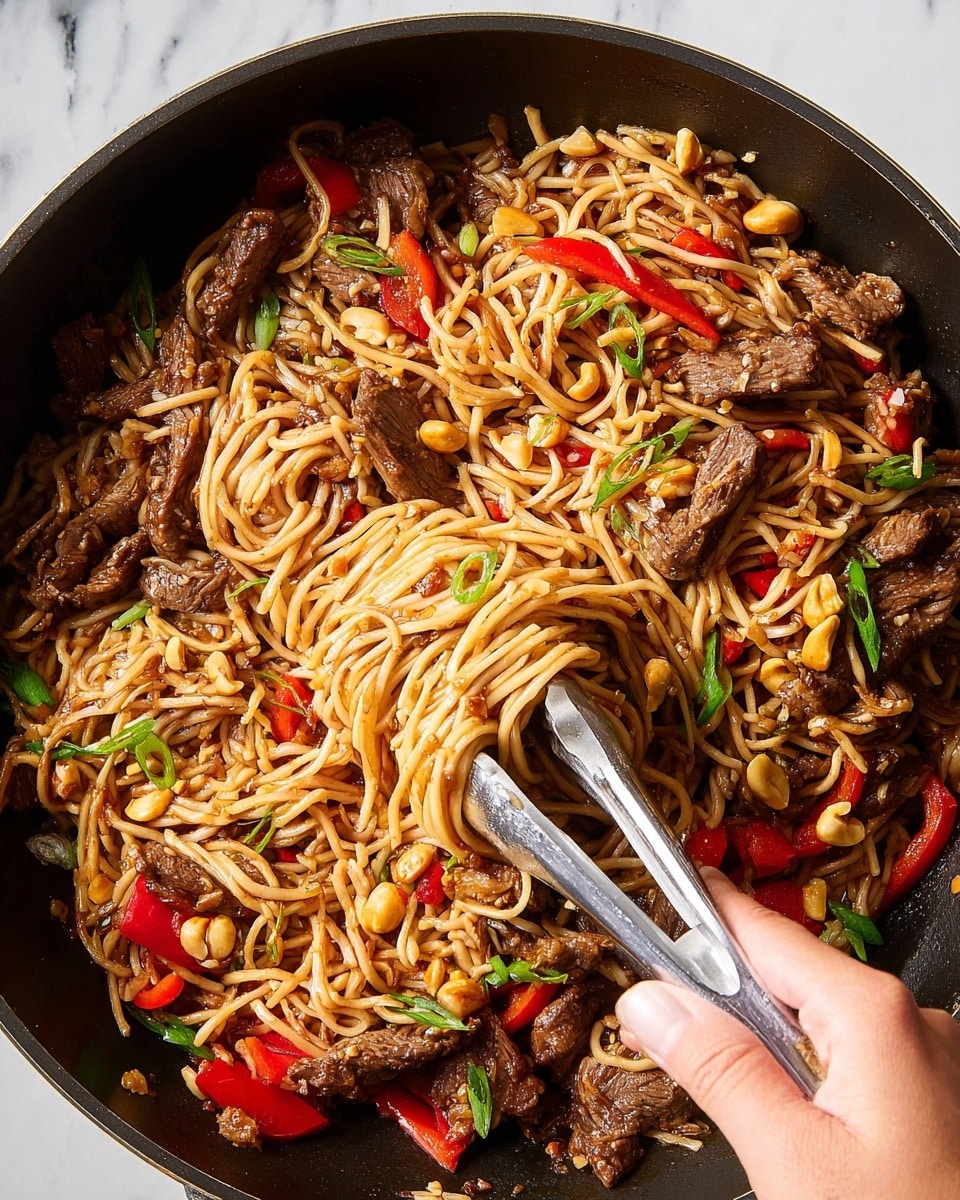
- Step 7: Add the prepared sauce and bring to a simmer. Cook, stirring, until slightly thickened, 1 to 2 minutes. Return the beef and any accumulated juices to the wok and toss to combine. Add the reserved lo mein noodles and cook, tossing constantly, until glossy and well coated.
- Step 8: Remove from heat and top with the dark green scallion parts before serving.
Tips & Variations
- For extra heat, keep some chile seeds or add a dash of chili oil to the dish.
- You can substitute flank steak with skirt steak or sirloin for tender results.
- If you prefer a vegetarian version, replace the beef with firm tofu and use vegetable broth in the sauce.
- Toast the peanuts yourself for even fresher flavor and crunch.
Storage
Store leftover Kung Pao Beef Lo Mein in an airtight container in the refrigerator for up to 3 days. Reheat gently in a wok or skillet over medium heat, adding a splash of water or broth to loosen the sauce if needed.
How to Serve
Serve this delicious recipe with your favorite sides.
FAQs
Can I make this dish ahead of time?
Yes, you can prepare the beef marinade and sauce in advance. Cook the dish just before serving to ensure the noodles stay fresh and the vegetables retain their texture.
What can I use if I don’t have Chinese black vinegar?
Rice wine vinegar is a good substitute if you don’t have Chinese black vinegar. It will provide a similar tangy flavor, though the taste will be slightly lighter.
PrintKung Pao Beef Lo Mein Recipe
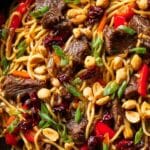
This Kung Pao Beef Lo Mein recipe combines tender flank steak with chewy lo mein noodles, crunchy peanuts, and a flavorful spicy-sour sauce inspired by traditional Sichuan cuisine. Marinated beef is stir-fried with aromatic chiles, ginger, garlic, and scallions, then tossed with noodles and a tangy sauce to create a perfectly balanced, savory, and slightly sweet dish that comes together quickly on the stovetop.
- Prep Time: 20 minutes
- Cook Time: 15 minutes
- Total Time: 35 minutes
- Yield: 4 servings 1x
- Category: Main Dish
- Method: Stovetop
- Cuisine: Chinese
Ingredients
Beef Marinade
- 1 large egg white
- 1 lb. flank steak, thinly sliced against the grain
- 1 tbsp. reduced-sodium soy sauce
- 2 tsp. cornstarch
- 1 tsp. Shaoxing wine, dry sherry, or mirin
Sauce
- 3 tbsp. plus 1 1/2 tsp. Chinese black vinegar or rice wine vinegar
- 3 tbsp. granulated sugar
- 1 tsp. kosher salt
- 1/2 tsp. MSG (optional)
- 3 tbsp. reduced-sodium soy sauce
- 3 tsp. Shaoxing wine, dry sherry, or mirin
- 2 tsp. cornstarch
Main and Aromatics
- 1 (10-oz.) pkg. lo mein noodles
- 4 tbsp. vegetable oil, divided
- 6 dried chiles (such as Sichuan er jing tiao or chiles de árbol), seeds removed, cut into 1/4″ pieces
- 1 cup roasted, unsalted peanuts
- 1/2 tsp. Sichuan peppercorns or freshly ground black pepper
- 1 red bell pepper, seeds and ribs removed, finely chopped
- 1 (1″) piece fresh ginger, peeled, grated (about 1 tbsp.)
- 5 garlic cloves, grated
- 4 scallions, white and pale green parts cut into 1” pieces, dark green parts thinly sliced
Instructions
- Marinate the beef: In a medium bowl, whisk together the egg white, flank steak slices, 1 tablespoon soy sauce, 2 teaspoons cornstarch, and 1 teaspoon Shaoxing wine. Cover the bowl and let the beef marinate at room temperature for at least 20 minutes and up to 1 hour to tenderize and absorb flavors.
- Cook the noodles: Prepare the lo mein noodles according to the package instructions. Once cooked, drain and set aside to be added later.
- Make the sauce: In a small bowl, combine 3 tablespoons plus 1 1/2 teaspoons Chinese black vinegar or rice wine vinegar, granulated sugar, kosher salt, optional MSG, remaining 3 tablespoons soy sauce, 3 teaspoons Shaoxing wine, and 2 teaspoons cornstarch. Whisk well until smooth and set aside.
- Cook the beef: Heat 3 tablespoons of vegetable oil in a large wok or cast-iron skillet over medium-high heat. Place half of the marinated beef in a single layer, cooking and stirring occasionally until browned and just cooked through, about 2 to 3 minutes. Transfer the cooked beef to a plate and repeat with the remaining beef, pouring any juices over the cooked meat.
- Toast chiles, peanuts, and peppercorns: Reduce the heat to medium-low and add the remaining tablespoon of oil to the wok. Add the chopped dried chiles, roasted peanuts, and Sichuan peppercorns or black pepper. Stir frequently and cook until the chiles darken slightly and the peanuts turn golden, approximately 1 minute, releasing their aroma.
- Sauté vegetables and aromatics: Add the finely chopped red bell pepper, grated ginger, grated garlic, and the white and pale green parts of the scallions to the wok. Stir often, cooking until fragrant and the vegetables begin to soften, about 3 to 5 minutes.
- Add sauce and combine: Pour the prepared sauce into the wok and bring it to a simmer. Stir continuously until the sauce thickens slightly, about 1 to 2 minutes. Return the cooked beef along with any accumulated juices to the wok, tossing to coat evenly.
- Toss in noodles: Add the drained lo mein noodles to the wok and toss constantly to combine all ingredients thoroughly and coat the noodles with the glossy sauce.
- Finish and serve: Remove the wok from heat. Garnish the dish by sprinkling the thinly sliced dark green scallion parts on top before serving for a fresh, vibrant finish.
Notes
- For best flavor, use Sichuan dried chiles such as er jing tiao or chiles de árbol, but you can substitute with other dried red chiles if needed.
- Marinating the beef with egg white helps tenderize the meat and create a silky texture in the final dish.
- Adjust the amount of dried chiles and Sichuan peppercorns to control the level of spiciness and numbing heat.
- If Shaoxing wine is not available, dry sherry or mirin can be used as alternatives.
- Use reduced-sodium soy sauce to keep salt levels balanced.
- To make this dish gluten-free, select gluten-free soy sauce and lo mein noodles made from rice or other gluten-free grains.
- This recipe is best cooked fresh and served immediately for optimal texture and flavor.
Keywords: Kung Pao Beef, Lo Mein, Chinese stir-fry, Sichuan beef, spicy beef noodles, Chinese noodles, stir-fried beef, peanut sauce, Chinese cuisine