Homemade Bagels Recipe
Introduction
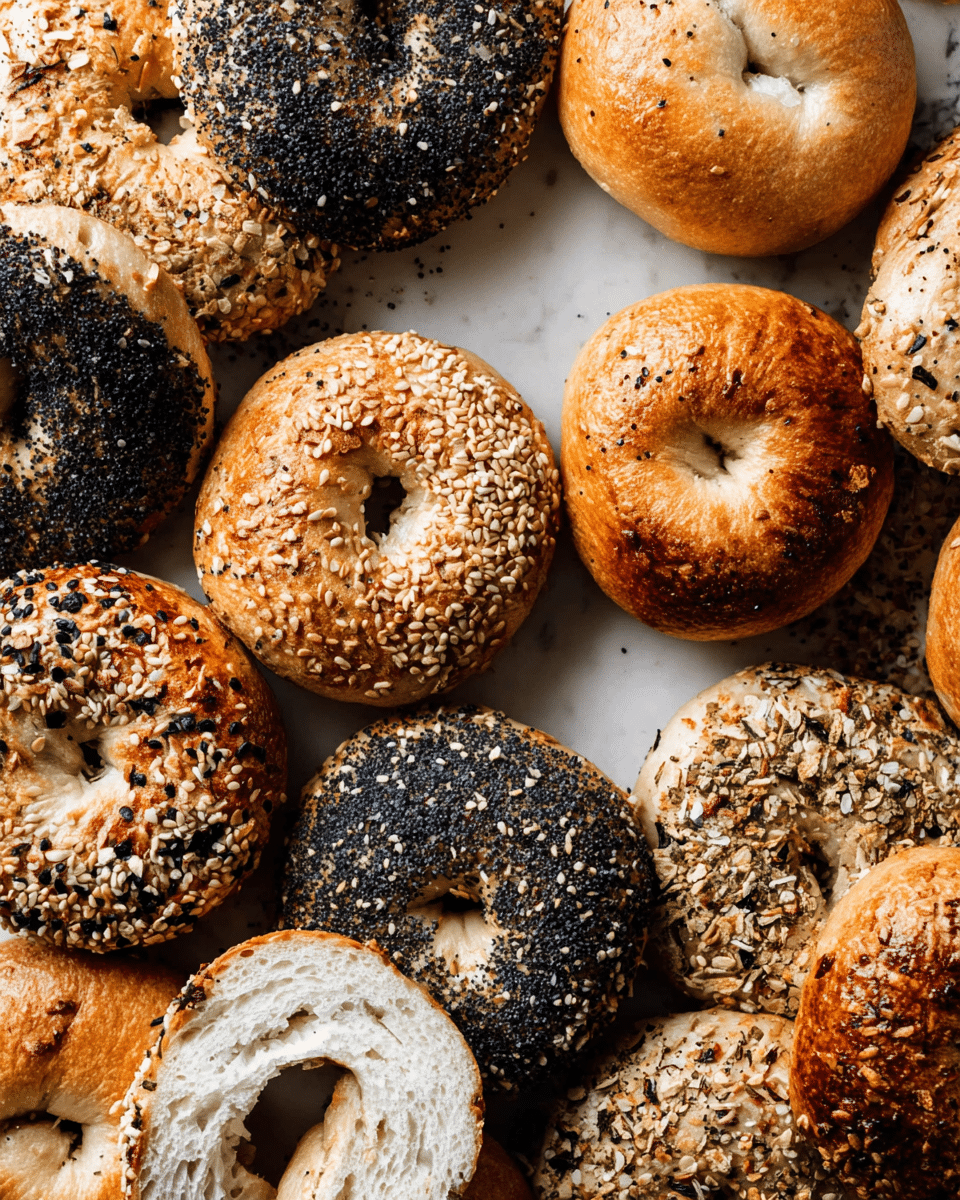
Making homemade bagels is a rewarding experience that fills your kitchen with irresistible aromas. These bagels have a chewy crust and a soft, dense interior, perfect for toasting and topping with your favorite spreads or fillings.
Ingredients
- 1 and 1/2 cups (360 ml) warm water (between 100–110°F/38–43°C)
- 2 and 3/4 teaspoons (8g) instant or active dry yeast*
- 1 Tablespoon barley malt syrup, granulated sugar, or brown sugar*
- 4 cups (520g) bread flour (spooned & leveled), plus more as needed*
- 2 teaspoons salt
- Nonstick spray, butter, or oil for coating the bowl
- 2 quarts (1.9L) water
- 1/4 cup (85g) barley malt syrup or honey
- Egg wash: 1 egg white beaten with 1 Tablespoon water
Instructions
- Step 1: In the bowl of a stand mixer fitted with a dough hook, whisk warm water, barley malt syrup or sugar, and yeast together. Cover and let sit for 5 minutes. If you don’t have a stand mixer, mix in a large bowl using a spoon or spatula in the next step.
- Step 2: Add flour and salt. Beat on medium speed for 2 minutes until the dough pulls away from the sides. If sticky, add flour 1 tablespoon at a time. If crumbly, add water 1 teaspoon at a time until dough is stiff but not dry.
- Step 3: Knead on low speed with dough hook for 6–7 minutes or by hand on a floured surface until smooth and elastic. Use the “windowpane test” to check: stretch a small piece until thin and translucent without tearing.
- Step 4: Lightly grease a large bowl. Place dough inside, turning to coat all sides. Cover with plastic wrap or towel and let rise at room temperature for 1.5–2 hours, until doubled.
- Step 5: Preheat oven to 425°F (218°C). Line two baking sheets with parchment or silicone mats.
- Step 6: Punch down the dough. On a floured surface, divide into 8 equal pieces (about 4 ounces each). Shape into balls. Poke a hole through each ball with your finger and stretch it to 1.5–2 inches in diameter. Place on baking sheets. Cover and rest for 5–10 minutes.
- Step 7: Bring 2 quarts of water with barley malt syrup or honey to a boil in a large pot. Reduce to medium-high heat. Boil 2–3 bagels at a time for 1 minute per side. Drain with a slotted spatula and return to baking sheets.
- Step 8: Brush bagels with egg wash. Add toppings if desired by dipping the tops immediately after brushing.
- Step 9: Bake for 20–25 minutes, rotating pans halfway through, until dark golden brown. Cool on baking sheets 20 minutes, then transfer to a rack to cool completely.
- Step 10: Slice, toast, and enjoy with your favorite toppings. Store leftovers tightly covered.
Tips & Variations
- Use barley malt syrup for an authentic bagel flavor and shiny crust, but honey or brown sugar work well as substitutes.
- If dough feels too sticky during kneading, sprinkle small amounts of flour gradually to maintain softness.
- Add toppings like sesame seeds, poppy seeds, or everything seasoning right after brushing egg wash for best adhesion.
- Try boiling bagels with baking soda in the water for a slightly different crust texture.
Storage
Store leftover bagels tightly covered at room temperature for up to 4 days or refrigerate for up to 1 week. Reheat by toasting or warming in the oven to restore some of the fresh-baked texture.
How to Serve
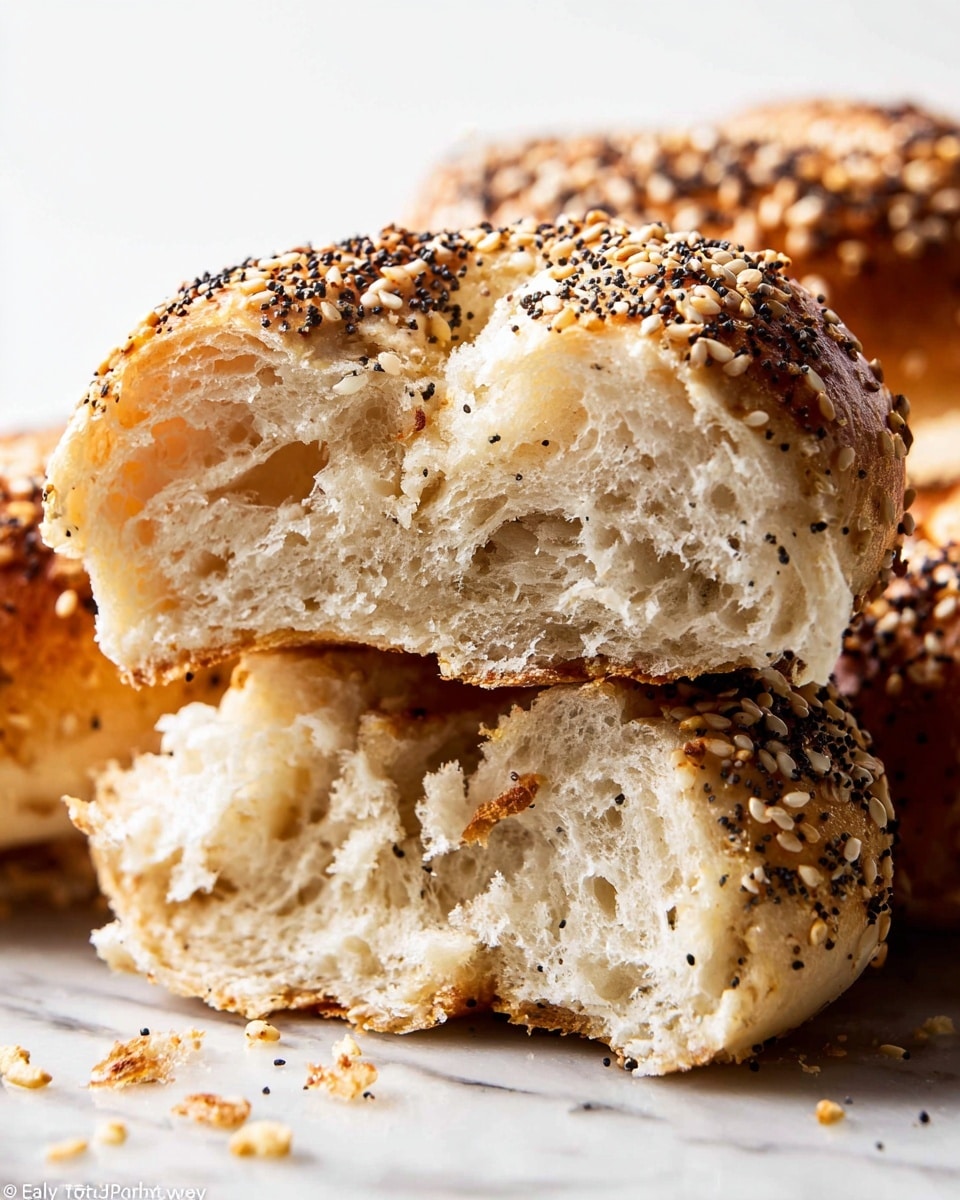
Serve this delicious recipe with your favorite sides.
FAQs
Can I use instant yeast instead of active dry yeast?
Yes, instant yeast can be used interchangeably with active dry yeast in this recipe. It may even reduce rise time slightly.
Why do bagels need to be boiled before baking?
Boiling bagels quickly sets the crust, gives them their characteristic chewiness, and helps develop a shiny, golden exterior when baked.
PrintHomemade Bagels Recipe
This homemade bagel recipe yields chewy, dense, and golden bagels with a classic crust made from a malt-sweetened water bath. Perfect for toasting and topping with your favorite spreads, these bagels combine simple ingredients and a careful kneading and boiling process to recreate authentic bakery-style bagels at home.
- Prep Time: 20 minutes
- Cook Time: 25 minutes
- Total Time: 2 hours 45 minutes
- Yield: 8 bagels 1x
- Category: Bread
- Method: Baking
- Cuisine: American
Ingredients
Dough Ingredients
- 1 and 1/2 cups (360ml) warm water (between 100–110°F / 38–43°C)
- 2 and 3/4 teaspoons (8g) instant or active dry yeast
- 1 Tablespoon barley malt syrup, granulated sugar, or brown sugar
- 4 cups (520g) bread flour (spooned & leveled), plus more as needed
- 2 teaspoons salt
Bowl Coating
- Nonstick spray, butter, or oil (for coating the bowl)
Boiling Bath
- 2 quarts (1.9L) water
- 1/4 cup (85g) barley malt syrup or honey
Egg Wash
- 1 egg white beaten with 1 Tablespoon water
Instructions
- Prepare the dough: In a stand mixer bowl fitted with a dough hook, whisk the warm water, malt syrup or sugar, and yeast together. Cover and let it sit for 5 minutes until foamy. If you don’t use a mixer, mix in a large bowl with a spoon.
- Mix the dough: Add the bread flour and salt to the yeast mixture. Beat on medium speed for 2 minutes until the dough forms a rough ball and pulls away from the sides. Add flour or water as needed to achieve a stiff, slightly dry dough.
- Knead the dough: Continue kneading on low speed with the dough hook for 6–7 minutes or knead by hand on a lightly floured surface until the dough is smooth, elastic, and slightly tacky. Use the windowpane test to confirm readiness.
- First rise: Lightly grease a large bowl with oil or butter. Place the dough inside, turning to coat with oil. Cover with plastic wrap or towel and let rise for 1.5–2 hours at room temperature until doubled in size.
- Prepare baking sheets: Line two large baking sheets with parchment paper or silicone mats.
- Shape the bagels: Punch down the risen dough to release air. On a floured surface, divide into 8 equal pieces (~4 oz each). Shape each into balls, poke a hole through the center with your finger, and stretch it to about 1.5–2 inches diameter. Arrange on baking sheets, cover loosely, and rest for 5–10 minutes.
- Preheat oven: Preheat your oven to 425°F (218°C).
- Boil the bagels: Bring 2 quarts of water mixed with 1/4 cup barley malt syrup or honey to a boil. Reduce to medium-high heat. Boil 2-3 bagels at a time for 1 minute on each side. Remove with a slotted spatula and drain excess water. Return bagels to baking sheets.
- Apply egg wash and toppings: Brush each bagel with the beaten egg white mixture. If desired, immediately dip the tops into toppings of choice.
- Bake: Bake the bagels for 20–25 minutes, rotating pans halfway through, until the bagels are dark golden brown.
- Cool: Let the bagels cool on the baking sheets for 20 minutes, then transfer to a wire rack until completely cool.
- Serve and store: Slice, toast, and add your favorite toppings to enjoy. Store leftovers tightly covered at room temperature for up to 4 days or refrigerate for up to 1 week.
Notes
- Using barley malt syrup in the water bath enhances browning and adds authentic bagel flavor, but honey or sugar can be used as substitutes.
- The dough should be stiff but still slightly tacky; too much flour will make dry bagels, while too little will cause stickiness.
- Kneading properly is key for chewy texture; use the windowpane test to ensure gluten development.
- Boiling the bagels before baking creates the signature chewy crust and shiny exterior.
- Egg wash helps achieve a glossy finish; skip for a matte crust or use milk or cream instead for variation.
- You can add toppings like sesame seeds, poppy seeds, or everything bagel seasoning immediately after egg wash before baking.
- Make sure water is at a gentle boil for boiling bagels to prevent them from becoming overly soft or falling apart.
- Store bagels properly to maintain freshness; freezing is also an option for longer storage.
Keywords: homemade bagels, bagel recipe, chewy bagels, baked bagels, breakfast bread, yeast bread