Poached Eggs Recipe
Introduction
Poached eggs are a delicate and delicious breakfast staple, perfect for topping toast or salads. This simple method ensures tender whites and runny yolks every time, without the need for oil or butter.
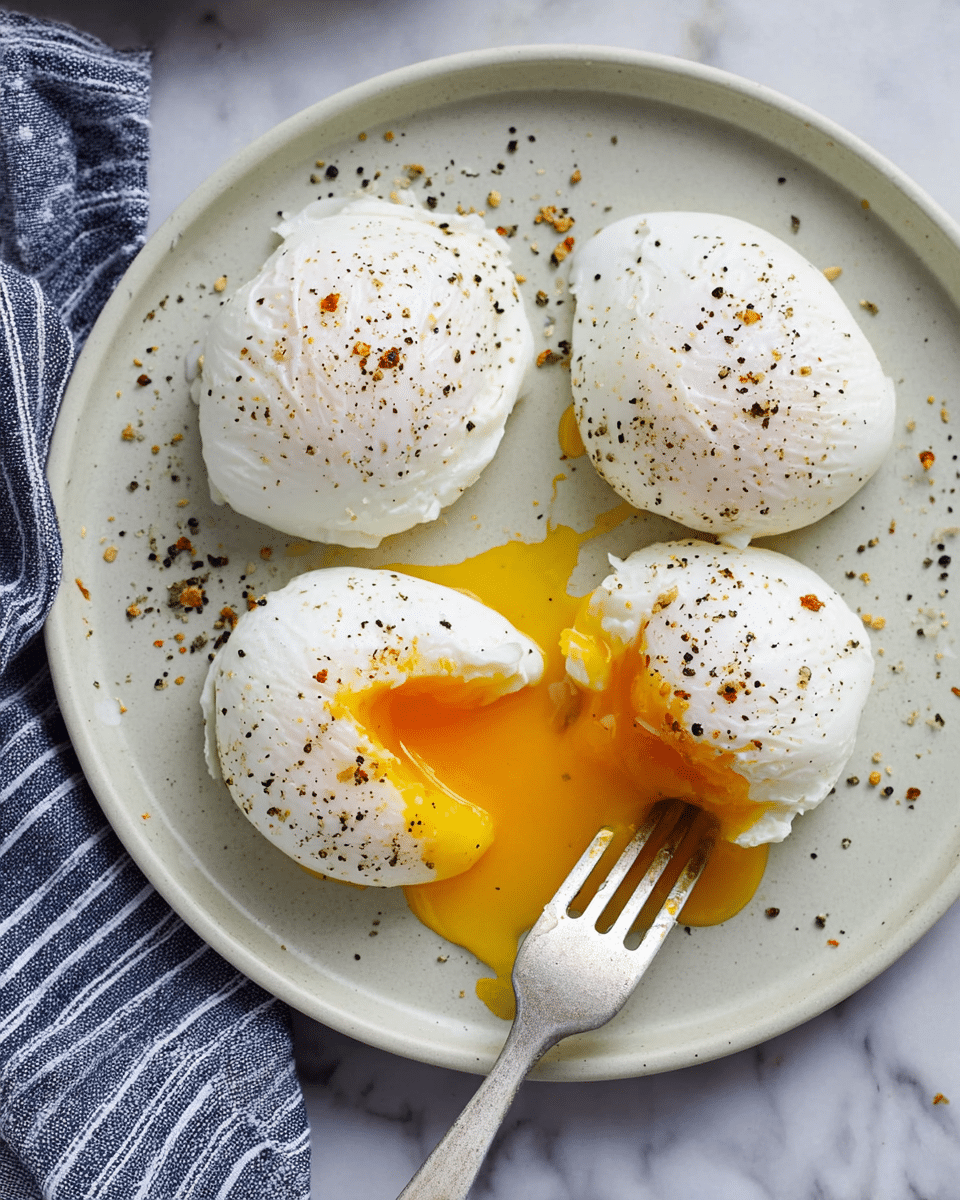
Ingredients
- 4 large eggs
- 2 tablespoons white vinegar
Instructions
- Step 1: Bring a large pot of water to a boil over high heat. Once boiling, reduce the heat to medium to maintain a gentle simmer.
- Step 2: Crack one egg into a small bowl. Add the vinegar to the simmering water and stir in a circular motion to create a swirling vortex.
- Step 3: Carefully and quickly slide the egg from the bowl into the center of the vortex. Let it cook undisturbed for 4 to 5 minutes until the white is set and the yolk remains soft.
- Step 4: Use a slotted spoon to lift the poached egg from the water. Place it on a plate lined with paper towels to drain any excess water.
- Step 5: Repeat this process with the remaining eggs, one at a time.
- Step 6: Serve the poached eggs immediately, or store them in an airtight container in the refrigerator for up to 3 days.
Tips & Variations
- Use the freshest eggs possible for the best shape and texture when poaching.
- Adding vinegar helps the egg whites coagulate faster, but you can adjust the amount to taste or omit if desired.
- To poach multiple eggs at once, increase the pot size and create separate vortices carefully, or poach individually for best results.
- Serve on avocado toast, English muffins, or with hollandaise sauce for a classic Eggs Benedict variation.
Storage
Store cooled poached eggs in a single layer in an airtight container in the refrigerator for up to 3 days. Reheat gently by placing them in simmering water for about 1 minute to warm through without overcooking.
How to Serve
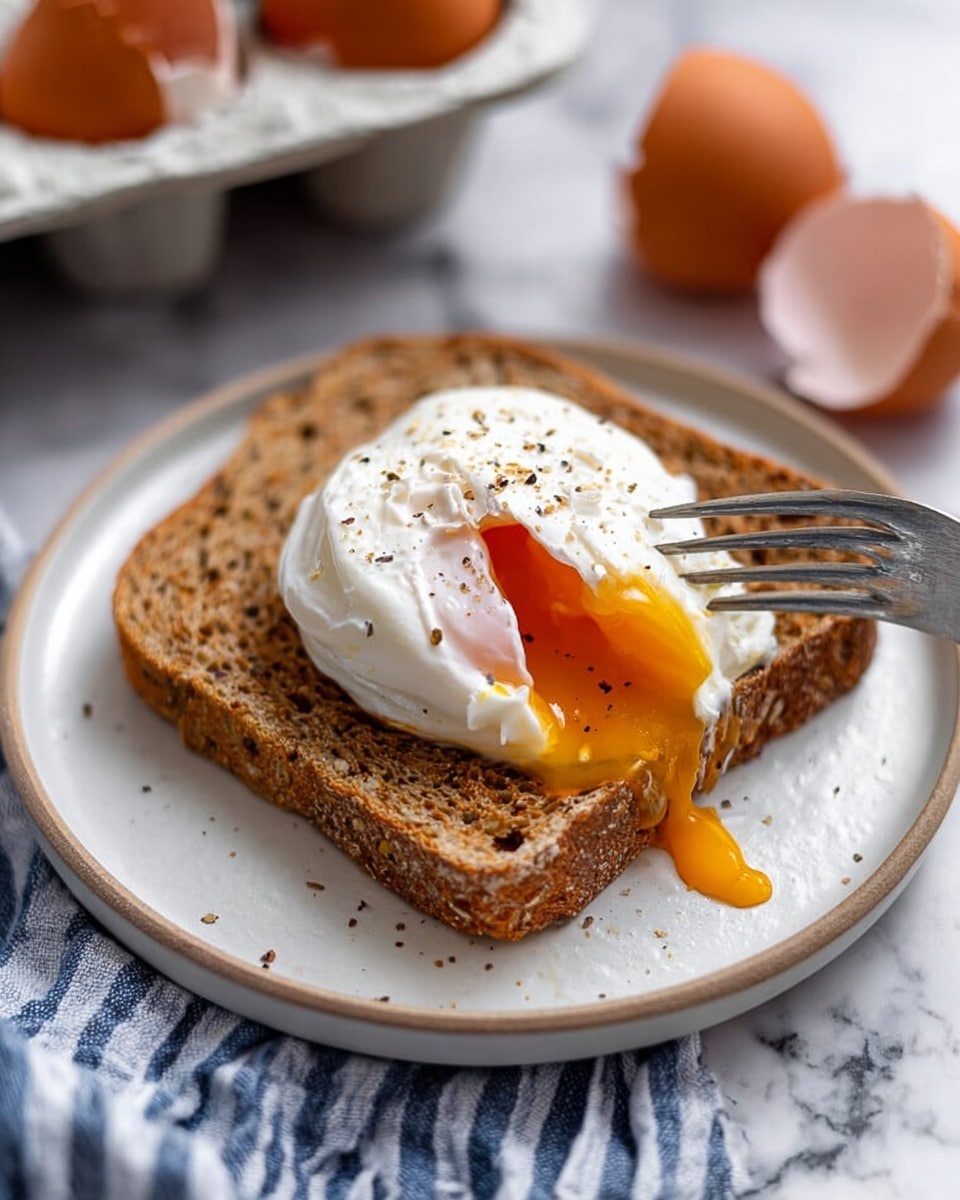
Serve this delicious recipe with your favorite sides.
FAQs
Can I poach eggs without vinegar?
Yes, vinegar helps the egg whites set quickly but is not essential. Without it, your eggs may spread out more in the water but will still taste great.
How do I know when poached eggs are done?
The whites should be fully set without any runny parts, while the yolks remain soft and slightly runny to the touch. Cooking for 4 to 5 minutes usually achieves this.
PrintPoached Eggs Recipe

This classic recipe teaches you how to make perfectly poached eggs with a simple technique using white vinegar to help the egg whites set quickly. Poached eggs are a versatile, protein-packed option that can be served on toast, salads, or as a topping for various dishes.
- Prep Time: 5 minutes
- Cook Time: 20 minutes
- Total Time: 25 minutes
- Yield: 4 poached eggs 1x
- Category: Breakfast
- Method: Stovetop
- Cuisine: International
- Diet: Low Fat
Ingredients
Ingredients
- 4 large eggs
- 2 tablespoons white vinegar
Instructions
- Boil Water: Bring a large pot of water to a boil over high heat on the stove. Once boiling, reduce the heat to medium to maintain a gentle simmer with light bubbling.
- Prepare Egg and Water: Crack one egg into a small bowl. Add the white vinegar into the simmering water and stir the water in a circular motion to create a swirling vortex.
- Poach Egg: Gently and quickly pour the egg from the bowl into the center of the vortex. Let the egg cook for 4-5 minutes until the white is set but the yolk remains soft.
- Remove and Drain: Remove the poached egg carefully using a slotted spoon and place it on a paper towel-lined plate to absorb any excess water.
- Repeat: Repeat the process for the remaining eggs, one at a time.
- Serve or Store: Serve the poached eggs immediately while warm or store them in an airtight container in the refrigerator for up to 3 days.
Notes
- Use fresh eggs for the best poaching results, as fresh eggs hold their shape better in the water.
- The addition of vinegar helps the egg whites coagulate faster, preventing wispy whites in the water.
- Maintain a gentle simmer rather than a full boil to prevent the eggs from breaking apart.
- Poached eggs are delicious served on toast, salads, or with breakfast dishes like eggs Benedict.
Keywords: poached eggs, breakfast eggs, egg recipes, stovetop poached eggs, healthy breakfast